From the lab
How Stanford researchers are using Marlowe — from brain-scale neural networks and genomic foundation models to autonomous systems and beyond.

Marlowe Computing Spotlight: Gordon Wetzstein Lab - Life in Simulation
Gordon Wetzstein's lab is using Marlowe to build world models — AI that simulates reality from data alone — so robots and people can learn in lifel...
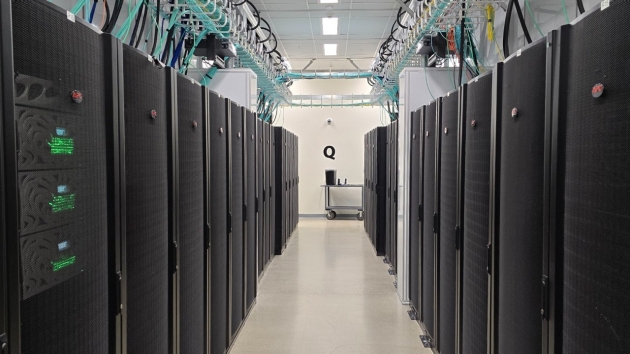
Stanford's Marlowe: An AI Supercomputer for Open Research
How Stanford built and runs Marlowe — 248 NVIDIA H100 GPUs serving more than 190 research groups across all seven schools — and what it takes to ke...

Marlowe Computing Spotlight: Elizabeth Schumann Group
Elizabeth Schumann, an assistant professor of music, is building a screen-free companion that prompts children toward child-led musical exploration...

Marlowe Computing Spotlight: Andreas Tolias Lab
A conversation with Andreas Tolias and Konstantin Willeke on the Enigma Project — building a multi-modal foundation model of the mouse and primate ...
Counterfactual World Modeling: Training Brain-Scale Neural Networks
Trained PSI-32B — a 32-billion-parameter counterfactual world model that learns to predict how the physical world changes in response to actions — ...

Frontiers of AI Scaling: Synthetic Data and Test-Time Reasoning
As the finite pool of internet text that powered a decade of AI scaling runs dry, Candès's group uses Marlowe to chart the next frontiers — generat...