Research Focus
Marlowe enables frontier-scale AI research across Stanford, from brain-scale world models to genomic foundation models to autonomous driving systems. Read their stories and meet the community pushing the boundaries of what's possible with GPU computing.
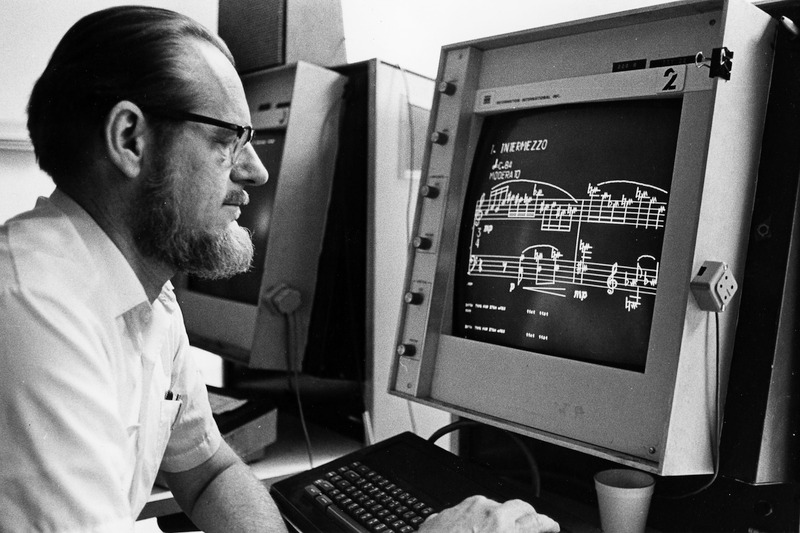 Computer music · 1976
Leland Smith with computer music displayed on a CRT monitor · Stanford, 05/19/1976
From the lab

Marlowe Computing Spotlight: Gordon Wetzstein Lab - Life in Simulation
Gordon Wetzstein's lab is using Marlowe to build world models — AI that simulates reality from data alone — so robots and people can learn in lifel...
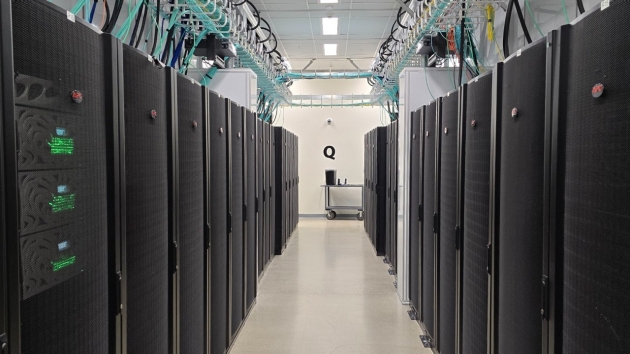
Stanford's Marlowe: An AI Supercomputer for Open Research
How Stanford built and runs Marlowe — 248 NVIDIA H100 GPUs serving more than 190 research groups across all seven schools — and what it takes to ke...

Marlowe Computing Spotlight: Elizabeth Schumann Group
Elizabeth Schumann, an assistant professor of music, is building a screen-free companion that prompts children toward child-led musical exploration...

Marlowe Computing Spotlight: Andreas Tolias Lab
A conversation with Andreas Tolias and Konstantin Willeke on the Enigma Project — building a multi-modal foundation model of the mouse and primate ...
Counterfactual World Modeling: Training Brain-Scale Neural Networks
Trained PSI-32B — a 32-billion-parameter counterfactual world model that learns to predict how the physical world changes in response to actions — ...

Frontiers of AI Scaling: Synthetic Data and Test-Time Reasoning
As the finite pool of internet text that powered a decade of AI scaling runs dry, Candès's group uses Marlowe to chart the next frontiers — generat...
The research community
Iro Armeni
4D Scene Understanding: AI for Dynamic Real-World Environments
Two active projects in 4D scene understanding on Marlowe. ReScene4D introduces temporally consistent instance segmentation from sparse 3D scans — a novel task for construction digital twins and embodied AI. A companion project develops end-to-end 4D reconstruction and camera localization from monocular video using DiT architectures for autonomous navigation and AR/VR.

Curtis Langlotz
Vision-Language Foundation Models for Radiology
We are building a vision-language foundation model for medical image interpretation, trained on Stanford's 2 petabytes of radiology data. Our first step is to train a chest x-ray foundation model, CheXOne, on 14.7 million samples across 36 clinical tasks. In a clinical reader study, radiology reports drafted by the model were comparable to or better than resident-written reports in 55% of cases. We are extending the model to incorporate 3D volumetric CT knowledge into X-ray interpretation, bridging 2D and 3D medical imaging through cross-dimensional representation learning.
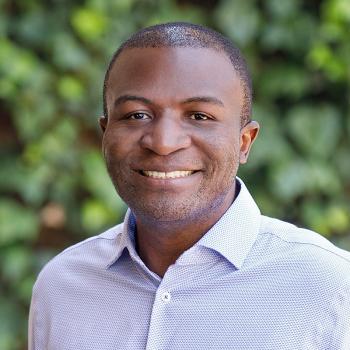
Thierry Tambe
Efficient AI Computing: From Model Compression to Edge-Deployable Video Generation
Extending BlockDialect (ICML 2025), their fine-grained mixed-format quantization method, from LLMs to video diffusion transformers — enabling real-time video generation on edge devices by quantizing models like Open-Sora 2.0. Also developing compact visual encoders using 2D Gaussian splatting for vision-language models. One of Marlowe's most active research groups.
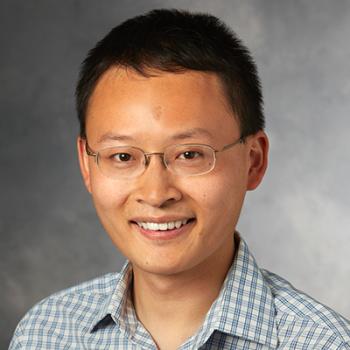
James Zou
AI Agents for Biomedical Discovery: Self-Improving LLMs with Scientific Tools
Developing algorithms that enable large language models to self-improve and learn to use scientific tools like AlphaFold and biomedical databases to build deeper expertise. Fine-tuning and evaluating LLMs (7B-70B parameters) for high-impact applications in healthcare, biology, chemistry, and medicine.
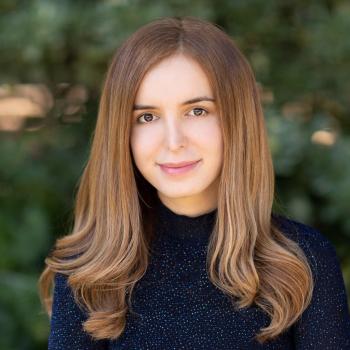
Azalia Mirhoseini
Personal and Efficient Local AI
OpenJarvis is an open-source framework for personal AI that runs entirely on personal devices, keeping user data local and calling the cloud only when truly necessary. While OpenJarvis performs inference on-device, the specialized small models that make local-first AI practical must first be trained at scale, and Marlowe provides the compute backbone for exactly this. We use Marlowe to distill and fine-tune compact, task-specialized language models that recover much of the capability of far larger cloud models while fitting within the strict latency, memory, and energy budgets of consumer hardware (NVIDIA GPUs, AMD GPUs, and Apple Silicon).
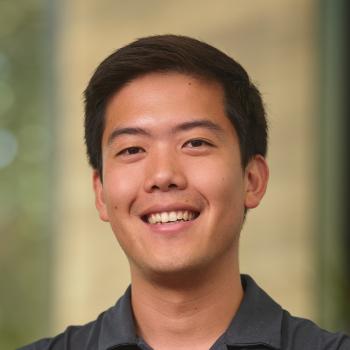
Brian Hie
Beyond Evo 2: Next-Generation Biological Models
Creators of Evo 2, the state-of-the-art DNA language model published in Nature, now developing next-generation biological models on Marlowe to address limitations in protein structure prediction and fitness tasks that scale alone cannot solve. Training models at 150M parameters before scaling to 1B, using training and inference infrastructure that has been used to scale models through 40B parameters.
Interested in using Marlowe for your research?
Principal Investigators new to Marlowe are eligible for 5,000 free GPU-hours. Get started with your first allocation.