Researcher profiles
The principal investigators putting Marlowe to work — across neuroscience, genomics, autonomous systems, foundation models, and more.
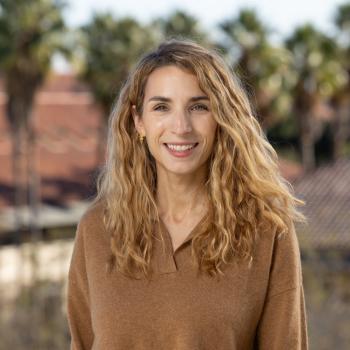
Iro Armeni
4D Scene Understanding: AI for Dynamic Real-World Environments
Two active projects in 4D scene understanding on Marlowe. ReScene4D introduces temporally consistent instance segmentation from sparse 3D scans — a novel task for construction digital twins and embodied AI. A companion project develops end-to-end 4D reconstruction and camera localization from monocular video using DiT architectures for autonomous navigation and AR/VR.

Curtis Langlotz
Vision-Language Foundation Models for Radiology
We are building a vision-language foundation model for medical image interpretation, trained on Stanford's 2 petabytes of radiology data. Our first step is to train a chest x-ray foundation model, CheXOne, on 14.7 million samples across 36 clinical tasks. In a clinical reader study, radiology reports drafted by the model were comparable to or better than resident-written reports in 55% of cases. We are extending the model to incorporate 3D volumetric CT knowledge into X-ray interpretation, bridging 2D and 3D medical imaging through cross-dimensional representation learning.
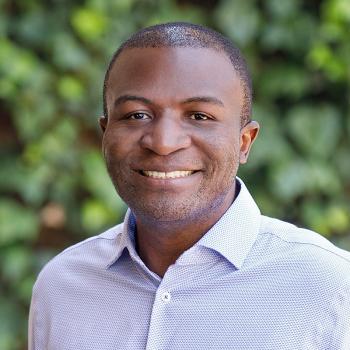
Thierry Tambe
Efficient AI Computing: From Model Compression to Edge-Deployable Video Generation
Extending BlockDialect (ICML 2025), their fine-grained mixed-format quantization method, from LLMs to video diffusion transformers — enabling real-time video generation on edge devices by quantizing models like Open-Sora 2.0. Also developing compact visual encoders using 2D Gaussian splatting for vision-language models. One of Marlowe's most active research groups.

James Zou
AI Agents for Biomedical Discovery: Self-Improving LLMs with Scientific Tools
Developing algorithms that enable large language models to self-improve and learn to use scientific tools like AlphaFold and biomedical databases to build deeper expertise. Fine-tuning and evaluating LLMs (7B-70B parameters) for high-impact applications in healthcare, biology, chemistry, and medicine.
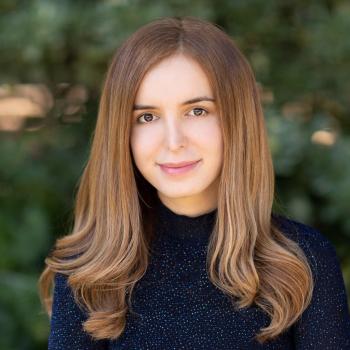
Azalia Mirhoseini
Personal and Efficient Local AI
OpenJarvis is an open-source framework for personal AI that runs entirely on personal devices, keeping user data local and calling the cloud only when truly necessary. While OpenJarvis performs inference on-device, the specialized small models that make local-first AI practical must first be trained at scale, and Marlowe provides the compute backbone for exactly this. We use Marlowe to distill and fine-tune compact, task-specialized language models that recover much of the capability of far larger cloud models while fitting within the strict latency, memory, and energy budgets of consumer hardware (NVIDIA GPUs, AMD GPUs, and Apple Silicon).
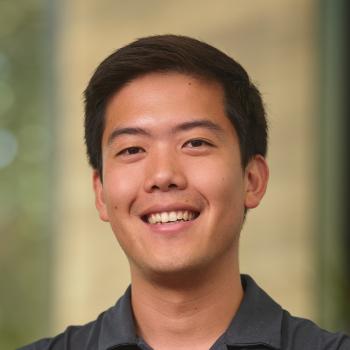
Brian Hie
Beyond Evo 2: Next-Generation Biological Models
Creators of Evo 2, the state-of-the-art DNA language model published in Nature, now developing next-generation biological models on Marlowe to address limitations in protein structure prediction and fitness tasks that scale alone cannot solve. Training models at 150M parameters before scaling to 1B, using training and inference infrastructure that has been used to scale models through 40B parameters.

Kay Giesecke
Time Machine: Time-Aware Pretrained LLMs for Finance and Economics
Pioneering time-aware LLMs that eliminate look-ahead bias — a fundamental flaw making current models unreliable for finance, economics, and policy analysis. Pretraining novel temporal architectures from 7B to 32B parameters on curated time-ordered datasets with dynamic data masking to prevent information leakage. Aiming to release open-source models and benchmarks as the foundational standard for time-aware AI in finance and economics.

Andreas Tolias
The Enigma Project: First Foundation Model and Digital Twin of the Brain
Trained the first foundation model of mammalian visual cortex on Marlowe — a 2B-parameter multimodal transformer on recordings from 3 million neurons across 330 mice, establishing the first-ever scaling laws for neuroscience. This work is foundational in NeuroAI for building much larger brain foundation models and a digital twin of the primate brain with up to 1 trillion tokens of neural data. One of Marlowe's earliest and most active research groups.

Gordon Wetzstein
Video World Models for 3D Scene Understanding and Generation
Fine-tuning billion-parameter video diffusion models on Marlowe for spatially aware scene understanding and generation. Two active projects: real-time automotive novel-view synthesis using LiDAR-conditioned video diffusion for driving simulation, and an in-the-wild 3D foundation model that jointly predicts geometry and novel views from casual photos. Building on Streetscapes (SIGGRAPH 2024) and two CVPR 2025 papers on world-consistent video diffusion and feed-forward 3D estimation.
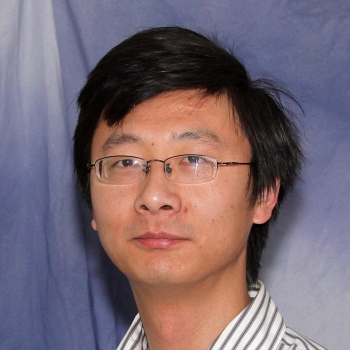
Ruijiang Li
World Models for Cancer Biology
Published a vision-language foundation model in Nature (January 2025) and AI-enabled virtual spatial proteomics in Nature Medicine (January 2026) for improving cancer diagnosis and treatment. Now building a generative world model for virtual cells on Marlowe — multi-scale AI that simulates from molecular cell-cell interactions to tumor microenvironment evolution — integrating histopathology images, spatial transcriptomics, spatial proteomics, and clinical data at billion-parameter scale.

Emmanuel Candès
Frontiers of AI Scaling: Synthetic Data and Test-Time Reasoning
As the finite pool of internet text that powered a decade of AI scaling runs dry, Candès's group uses Marlowe to chart the next frontiers — generating synthetic training data and scaling reasoning at test time. That work includes s1 (Simple Test-Time Scaling), a low-cost open reasoning model built in part on Marlowe and featured in The Economist. Running through all of it is a distinctively statistical agenda: knowing when an AI's output can be trusted, and how to correct it when it cannot.

Tengyu Ma
Parallel Chain-of-Thought: Reducing LLM Reasoning Latency via RL
Teaching reasoning LLMs to parallelize their long chains of thought using reinforcement learning — spawning parallel workers that investigate different approaches simultaneously, dramatically reducing inference latency while preserving accuracy on challenging math competitions like AIME. Submitted to ICML 2026, with 1.8x strong scaling demonstrated across 3 Marlowe nodes.
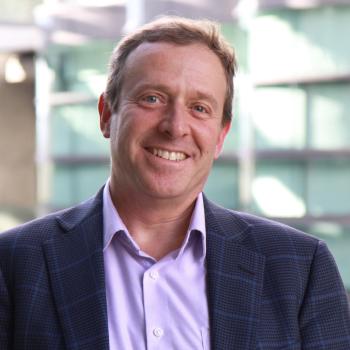
Jeffrey Glenn
Physics-Guided AlphaFold3: Reinforcement Learning for Drug Discovery
Training AlphaFold3 with reinforcement learning and physics-based Rosetta scoring on Marlowe to produce physically realistic molecular structures for drug discovery. On the CASP16 benchmark, RL training increased the proportion of high-quality structures from 13% to 62% and achieved state-of-the-art binding affinity among deep learning approaches. Now scaling from a 100M-parameter proof-of-concept to the full 400M-parameter AlphaFold3 model across 8 nodes.
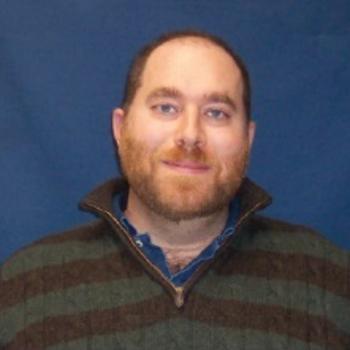
Dan Yamins
Counterfactual World Modeling: Training Brain-Scale Neural Networks
Trained PSI-32B — a 32-billion-parameter counterfactual world model that learns to predict how the physical world changes in response to actions — in a dedicated 30-day campaign across 24 nodes (192 H100 GPUs), the first hero run on Marlowe.

Jure Leskovec
AI Virtual Cell: Genomic Foundation Models at Frontier Scale
Building the molecular foundation of the AI Virtual Cell — novel reasoning architectures designed for biological data modalities (DNA, RNA, proteins) with biologically informed inductive biases, not adaptations of existing language models. Currently at 770M parameters with demonstrated scaling laws, targeting 3B-15B for open-source release.