Citing Marlowe in Your Research
If your research used Marlowe, please include the acknowledgment and citation below in your publications, talks, and presentations. Proper attribution helps us demonstrate impact and sustain the instrument for the whole Stanford research community.
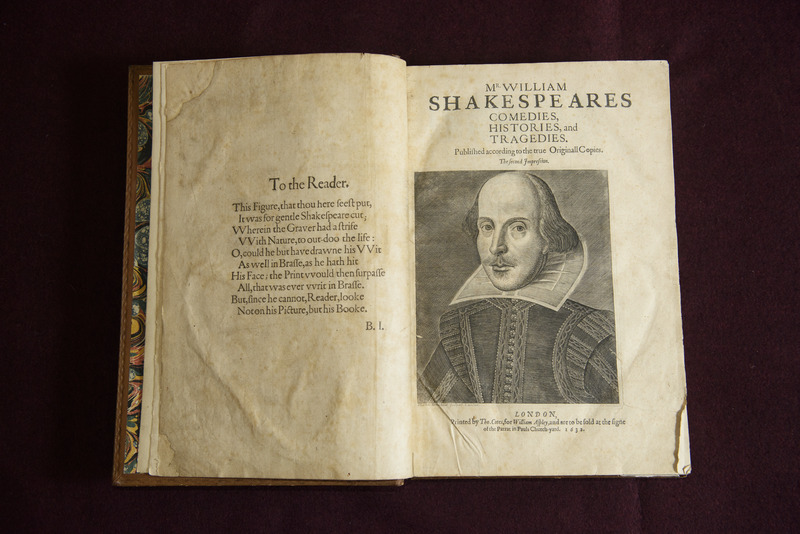 Second Folio · 1632
Shakespeare's Second Folio · Comedies, Histories & Tragedies, 1632
Why Cite Marlowe?
Citing and acknowledging Marlowe in your publications helps us:
- Demonstrate research impact to Stanford leadership and funding bodies
- Justify continued investment in GPU computing infrastructure
- Track the breadth and depth of research enabled by the instrument
- Support renewal and expansion of allocations for all researchers
Proper acknowledgment directly strengthens the case for sustaining and growing Marlowe as a shared resource for the Stanford research community.
Acknowledgment Text
Copy and paste the following into your paper's acknowledgments section:
"This work used Marlowe (Kapfer et al., 2025), Stanford University's GPU-based Computational Instrument, supported by Stanford HAI and Stanford Research Computing."
Citation
Please also cite the Marlowe instrument in your references:
Craig Kapfer, Kurt Stine, Balasubramanian Narasimhan, Christopher Mentzel, and Emmanuel Candès. Marlowe: Stanford's GPU-based Computational Instrument. 2025. DOI: 10.5281/zenodo.14751899
BibTeX
@misc{marlowe2025,
  author       = {Kapfer, Craig and Stine, Kurt and Narasimhan, Balasubramanian and Mentzel, Christopher and Candès, Emmanuel},
  title        = {Marlowe: Stanford's GPU-based Computational Instrument},
  year         = 2025,
  publisher    = {Zenodo},
  doi          = {10.5281/zenodo.14751899},
  url          = {https://doi.org/10.5281/zenodo.14751899}
}