NVIDIA & Marlowe Seminar Series
A recurring seminar run with NVIDIA at Stanford’s Computing and Data Science building — NVIDIA solutions architects presenting the tools and techniques behind large-scale GPU work, from first principles to the frameworks their teams build.
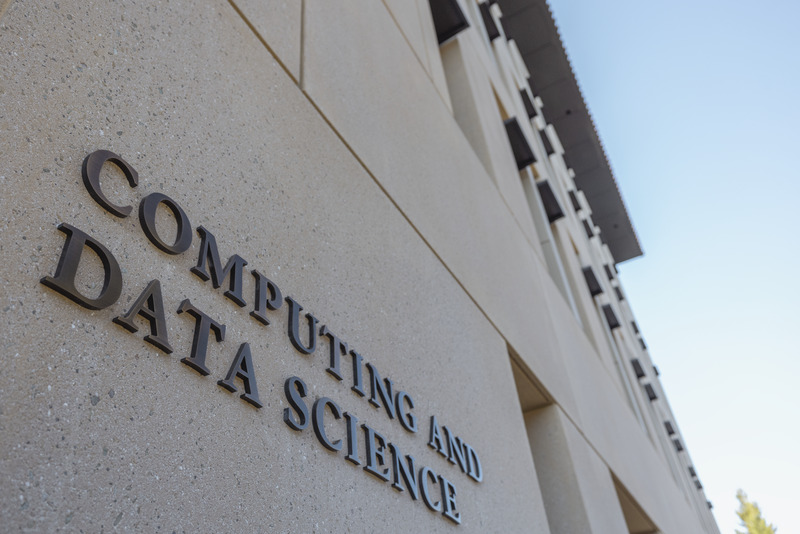 CoDa
CoDa
Computing & Data Science · Stanford
Sessions are in person at CoDa and open to Stanford faculty and staff, postdocs, and students. Each talk has its own registration — there is no sign-up for the series as a whole, so register for the ones you want to attend. Every session pairs a talk with time for questions, and the speakers are the engineers who work on what they are presenting.
Topics have ranged from GPU computing foundations and multi-node scaling through profiling with Nsight Systems, healthcare imaging with Clara, graph neural networks, CuPyNumeric, NeMo and PhysicsNeMo, open model ecosystems, world foundation models for robotics, and data-center workload monitoring.
Times and rooms vary by session — each listing below carries its own. Questions about the series: marlowe-info@stanford.edu. For day-to-day help with running on Marlowe rather than a talk, the team also holds open office hours twice a month on Zoom — those need no registration.
Upcoming sessions
The dates, times, and venue below are confirmed; topics are announced one session at a time. Where NVIDIA has named one, the title and abstract are here — the rest are still being finalized, and titles, speakers, and each session’s registration link are posted as they are announced.
Past sessions
-
Jun 3, 2026
NVIDIA & Marlowe: Scaling Code Agents for 100M+ LOC
This talk will cover how to use NVIDIA GPUs and GPU-accelerated techniques to efficiently index, update and search massive code-bases with over 100M lines of code. Building an index slashes tokens by nearly 70% without compromising speed or accuracy in vibe coding....
-
May 20, 2026
NVIDIA & Marlowe: Workload Performance and Health Monitoring in Data Centers
This session explores how to efficiently run and monitor large workloads in hyper-scalars and the kind of telemetry data we can monitor from the Infra and workload side. We will review various tools offered by NVIDIA to monitor the performance of a...
-
Apr 22, 2026
NVIDIA & Marlowe: Training Robots with World Foundation Models
This talk explores the new wave of robotics driven by world foundation models. We present our family of world models and describe how they are integrated into our ecosystem to scale robot training, simulation, and generalization across diverse tasks and environments.
-
Mar 11, 2026
NVIDIA New AI Models: Open Models — Open to Build
This talk will cover NVIDIA’s new wave of open AI models, data and tooling that enable researchers to build high-performance, domain-specialized systems. It will explore NVIDIA’s Nemotron family and broader open model ecosystem. From open weights and reproducible training recipes to safety,...
-
Feb 18, 2026
NVIDIA & Marlowe: Post-training Language Agents with NeMo RL and NeMo Gym
This talk covers modern post-training and reinforcement learning techniques used to train effective language models and agents. An overview of NVIDIA NeMo and Nemotron will be covered with a focus on NeMo-RL, NeMo-Gym and how these frameworks are used to train the...
-
Jan 28, 2026
Compute Resources @ Stanford and Beyond
This session covers the foundational knowledge of GPUs, including their architecture, functionality, and applications in computing. It provides an introduction to GPU computing through the lens of the Marlowe SuperPod and will cover the breadth of compute options that are available to...
-
Nov 12, 2025
NVIDIA PhysicsNeMo: Community Models and Dataset Integrations
Scientific machine learning (SciML) is becoming a fundamental part of research, development, and discovery workflows for scientists across many domains such as computational fluid dynamics, materials characterization, climate and weather modeling, and computer-aided engineering. With the increase in use of AI and...
-
Oct 29, 2025
Building Scalable, End-to-End Generative AI with NVIDIA NeMo Framework on Marlowe
As foundation models grow in scale and complexity, the need for reproducible, modular, and high-performance research frameworks has become critical. NVIDIA NeMo is an open, extensible framework built on PyTorch and tightly integrated with Megatron-Core and Transformer Engine for optimized distributed training...
-
Sep 24, 2025
Graph Neural Networks & LLMs in PyG on Marlowe
This talk will cover how Graph Neural Networks can be used to enhance LLMs using PyG to improve accuracy for RAG-like tasks across any kind of data domain. This will include examples on real world data. We will also cover how LLMs...
-
Aug 13, 2025
Using CuPyNumeric and the Legate Ecosystem for Multi-GPU Scaling on Marlowe
Discover how to use CuPyNumeric for seamlessly scaling NumPy code to multi-GPU and multi-node setups. This workshop will discuss the best practices and uses of cuPyNumeric with real world examples and performance comparisons.
-
Jul 16, 2025
NVIDIA Clara for AI-Enabled Healthcare and Life Sciences on Marlowe
This session provides an overview of NVIDIA Clara, which is an accelerated, AI-enabled platform for healthcare and life sciences. It will specifically highlight accelerated solutions for research areas such as medical imaging, genomics, drug discovery, LLMs and biomedical AI research assistant agents....
-
Jun 25, 2025
NVIDIA Nsight Systems for Profiling Code on Marlowe
Discover how to use Nsight Systems for system-wide profiling of GPU-accelerated applications. This workshop will help you identify performance bottlenecks and optimize code efficiency with detailed insights into system and GPU interactions.
-
May 21, 2025
Distributed Training & Marlowe Multi-GPU Best Practices
This training focuses on efficient strategies for using multiple GPUs and nodes. We will overview how to deploy strategies of data parallelism and model parallelism to scale to multiple GPUs, enabling faster training times and better model performance.
-
Apr 23, 2025
Marlowe GPU Computing Foundations: Architecture, Applications, and Acceleration
This session covers the foundational knowledge of GPUs, including their architecture, functionality, and applications in computing. It provides an introduction to GPU computing through the lens of the Marlowe SuperPod and prepares learners for advanced topics such as GPU-accelerated data science and...